
Laser Hair Removal Guide: Sessions, Results, Aftercare and Safety
A sourced laser hair removal guide covering session ranges, treatment intervals, results, aftercare, skin tone, device checks and warning signs.
There is no universal package or session count
The American Academy of Dermatology says most patients need two to six treatments and can often be treated every four to six weeks; Cleveland Clinic describes roughly six to eight treatments spaced six to eight weeks apart. Area, growth cycle, hair color and coarseness, skin tone, exact device, settings and hormonal influences can change both the plan and the result.
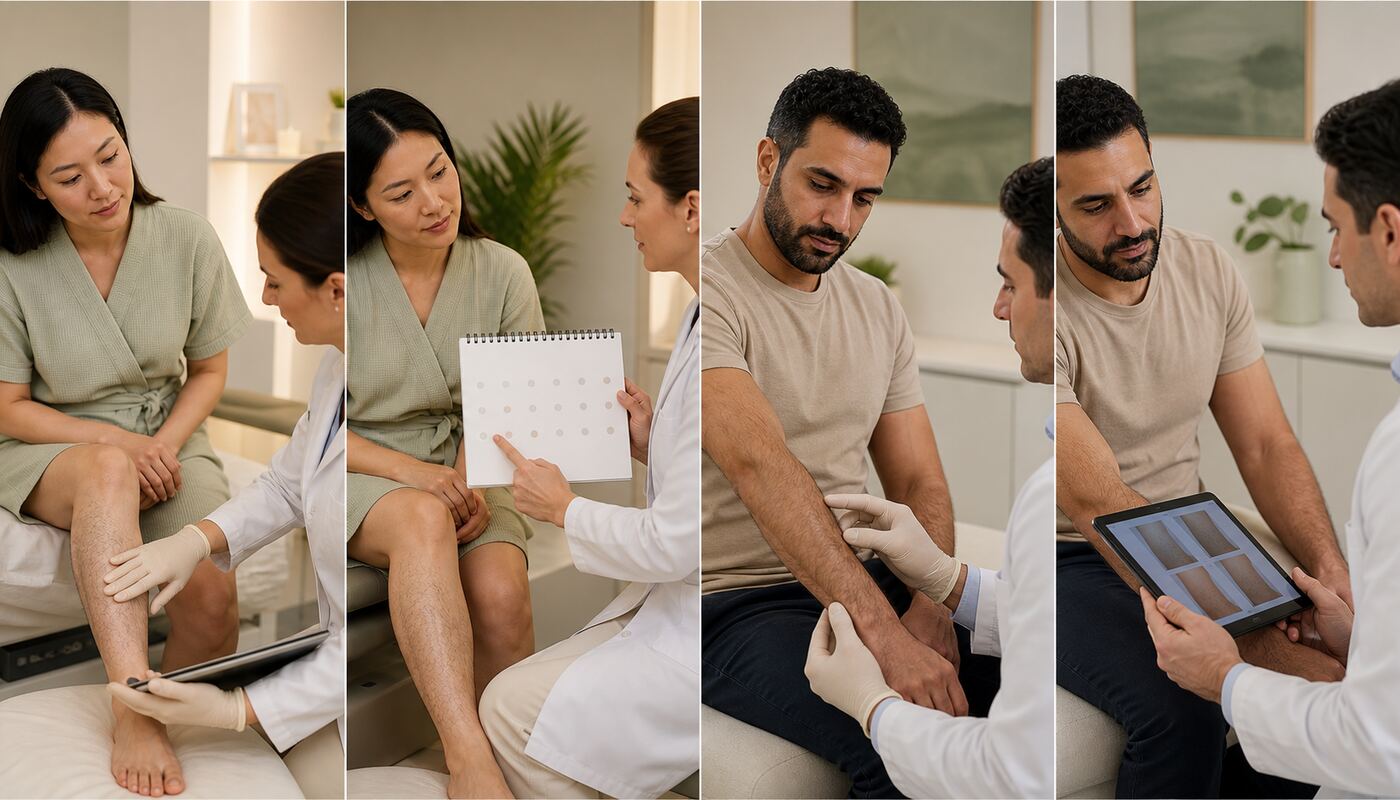
Separate the surface-response clock from the result clock
A calm skin surface does not mean the series is complete. Track consultation, short-term response, repeated sessions and later reassessment as separate milestones.
Consultation and baseline
Record the exact area, hair color and coarseness, skin tone, recent tanning, medicines, scar history, device and standardized photographs before accepting a package estimate.
Surface response and aftercare
Temporary redness, swelling or sensitivity can occur around treated follicles. Follow the written cooling, cleansing, sun and product instructions for the exact device used.
Repeat only after reassessment
Published intervals differ. The provider should judge skin recovery, hair-cycle response and whether settings remain appropriate before the next session.
Compare reduction and maintenance
Use repeatable photos and agreed endpoints. Remaining growth, maintenance needs and hormonal change should be discussed rather than treated as a failed or guaranteed package.
The bars are a visual comparison within this guide; they are not percentages or personal forecasts.
Five variables that change the treatment plan
The marketing name alone is not enough. These variables affect both what can be treated safely and how progress should be judged.
| Variable | Why it changes the plan | Question to ask |
|---|---|---|
| Exact technology | Laser wavelength, pulse settings, spot size and cooling differ; IPL is not the same technology as a laser. | What is the exact device and why is it being used for this area? |
| Skin tone and recent tan | Melanin in the skin changes energy absorption and pigment or burn risk. Operator experience with similar skin coloring matters. | How many people with my skin coloring has the operator treated with this device? |
| Hair color and coarseness | Pigment-poor gray, white, blond or some red hair responds differently from coarse dark hair. | Which hairs are realistic targets and which are unlikely to respond? |
| Body area and growth cycle | Only part of the hair population is in a responsive phase at one visit, and cycles differ by area. | Why is this interval appropriate for this exact body area? |
| Hormonal context | New or persistent growth can have a hormonal influence and may alter maintenance expectations. | Does this pattern need medical assessment before purchasing more sessions? |
Choose the guide that matches your laser hair removal question
Laser Hair Removal Cost Calculator
Compare per-session and package totals, visit costs and additional-session prices without invented market averages.
Compare two quotes SESSIONS · INTERVALS · MAINTENANCEHow Many Laser Hair Removal Sessions Do You Need?
Compare the AAD and Cleveland Clinic ranges, first-session change, package claims and maintenance questions.
Plan the treatment series AFTERCARE · FIRST HOURS TO DAY 3Laser Hair Removal Aftercare
Separate short-term redness and sensitivity from result timing, sun precautions, device safety and warning signs.
Open aftercare guideBefore paying: verify the device, operator and follow-up
- Ask whether the device is a laser or IPL and record its exact manufacturer, model, wavelength or light type and cooling method.
- Verify the operator and facility through the official register where treatment takes place; legal requirements differ by country.
- Discuss recent tanning, medicines, cold sores, keloid history, pigment changes and any hormonal pattern before treatment.
- Confirm patch-test policy, expected intervals, package expiry or refund terms, maintenance assumptions and who manages burns or pigment changes after hours.
Rules differ by country. Open official registers before comparing prices or booking treatment while traveling.
Check 12 marketsContact the treating professional promptly for blistering, burns, intense or increasing pain, spreading swelling, drainage, infection signs or unexpected light or dark patches. Seek urgent medical care for severe symptoms. Do not self-treat a burn or cover warning signs with unapproved topical numbing products.
How this guide was made
5 named sources support the main claims. Each link explains how it was used, with public agencies, professional bodies or primary research preferred.
AI may assist with research organization, drafting and translation, but it is not treated as a source or credential. Read the editorial standards.
The hub connects focused guides and organizes decision points. Its stage bars are navigation aids—not clinical scores, measured outcomes or treatment rankings.
This version has editorial evidence review, not medical review attributed to a named clinician. It does not replace an individual assessment. Editorial accountability.
Sources, ranges and limitations
Published ranges describe different patient populations and clinical contexts. They should be presented side by side, not blended into one guaranteed package. Device regulation and who may perform treatment differ internationally.
- American Academy of Dermatology: Laser Hair Removal FAQs
Common treatment range, interval, expected response, skin-tone context, side effects and dermatologist-selection questions.
- American Academy of Dermatology: Laser Hair Removal Preparation
Consultation, medical history, tanning, medication and preparation questions before treatment.
- Cleveland Clinic: Laser Hair Removal
Broader six-to-eight-session range, six-to-eight-week spacing, risks, preparation and expected treatment process.
- Leeds Teaching Hospitals NHS Trust: Laser Hair Reduction
NHS patient context on laser reduction, hair color, response limits, patch testing and treatment considerations.
- FDA: Warning About Certain Topical Pain Relief Products
Safety warning about certain high-concentration topical anesthetic products marketed for cosmetic procedures.
Laser hair removal questions
How many laser hair removal sessions do most people need?
There is no universal count. AAD guidance says most patients need two to six treatments, while Cleveland Clinic describes roughly six to eight. Area, growth cycle, hair characteristics, skin tone, device and hormonal influences matter.
Is laser hair removal permanent?
Treat it as long-term hair reduction rather than a promise that every hair is permanently removed. Remaining growth and maintenance vary by person, area and underlying influences.
Can every skin tone have laser hair removal?
Treatment can be performed across skin tones, but the exact device, settings, cooling and operator experience with similar skin coloring are important. Recent tanning can change the plan.
How long is the downtime?
Many people have a short surface response, but visible redness or swelling can last longer and complications are possible. Follow the instructions for the exact device and contact the provider for worsening symptoms.
This hub provides general education, not medical advice, diagnosis, a treatment recommendation, device-setting guidance or a personal result forecast. BeautiNext is not a clinic.