
Mineral vs Chemical Sunscreen: Ingredients, White Cast and Sensitive Skin
Compare mineral and chemical sunscreen ingredients, UV protection, white cast, tinted formulas, sensitive skin and global label differences.
Mineral vs Chemical Sunscreen
Neither mineral nor chemical sunscreen is universally better. The AAD says either type, including hybrid formulas, can protect effectively when it is broad spectrum, water resistant and SPF 30 or higher. In U.S. label language, zinc oxide and titanium dioxide identify mineral sunscreen; other listed UV filters identify chemical sunscreen. Choose a formula you can apply generously and repeatedly, and consider a tinted product with iron oxide when visible-light protection or white cast matters.
A sunscreen use sequence at a glance
The useful comparison starts with the active-ingredient list, then moves to the complete formula, finish and label. The words mineral, chemical, physical, organic and hybrid do not by themselves reveal UVA coverage, comfort or real-world use.
Identify the active filters
On U.S. labels, zinc oxide, titanium dioxide or both indicate a mineral sunscreen. A product using other sunscreen active ingredients is commonly called chemical; a mixture may be marketed as hybrid.
Check the protection label
Mineral versus chemical does not replace broad-spectrum or UVA coverage, SPF, water resistance and directions. Read the label used in your market.
Compare the whole formula
Vehicle, fragrance, tint, finish, eye comfort and other ingredients can influence tolerance and whether you use enough. One filter category cannot predict every skin reaction.
Test wearability, then use it correctly
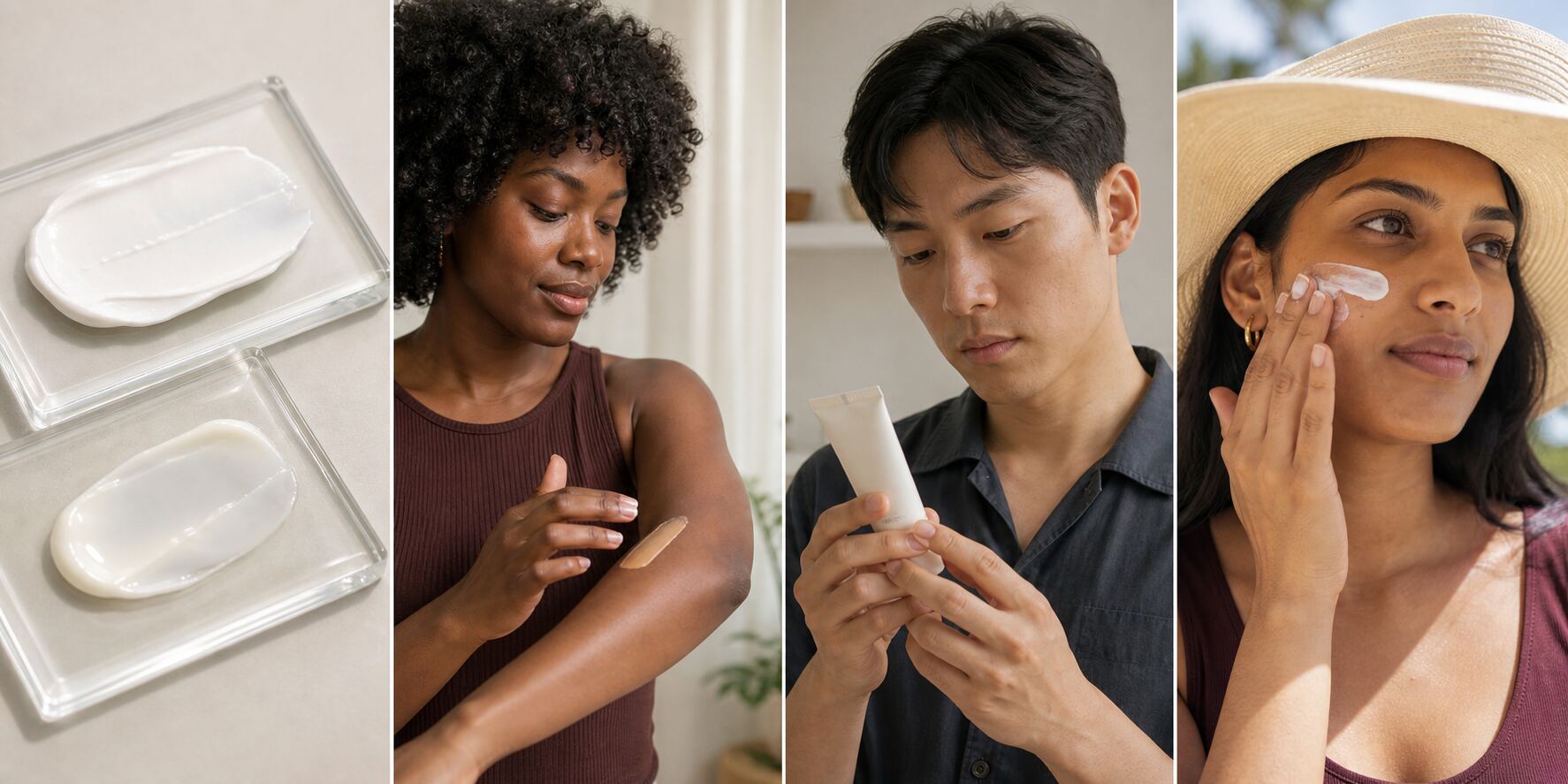
A sunscreen that blends with your skin tone and fits your routine is easier to reapply. Tinted formulas with iron oxide can add visible-light protection and reduce white cast for some people.
The bars organize application priority within this guide. They are not protection percentages, product ratings or personal exposure forecasts.
Both categories work mainly by absorbing UV
The mirror-versus-sponge story is too simple. The AAD explains that mineral, chemical and hybrid sunscreens all form a protective film that absorbs UV. Zinc oxide and titanium dioxide also reflect some radiation, but mineral protection is not explained by reflection alone.
The active filters define the category in U.S. consumer language, while the rest of the formula affects spread, finish, tint, fragrance, eye comfort and wear. That is why two mineral sunscreens can behave very differently on the same skin, and why a chemical formula cannot be judged only by its category name.
Deeper visual interpretation
Filter category is only the first row of the comparison. The complete formula, UVA label, tint, fragrance, water resistance, eye comfort and whether you can apply enough all shape the sunscreen you actually wear.
| Question | Mineral | Chemical or hybrid |
|---|---|---|
| U.S. active-ingredient identity | Zinc oxide, titanium dioxide or both | Other permitted UV filters; hybrid formulas combine categories |
| How UV is handled | Mainly absorbed, with some radiation also reflected | Absorbed by the protective film |
| Finish | May leave a visible residue, but tint and newer vehicles can change this | May look sheer, but finish varies by formula and skin tone |
| Sensitive skin | Often suggested as an option, but the full formula can still irritate | Not automatically irritating; test the exact complete formula |
| Visible light | A tint containing iron oxide may add visible-light protection | Tint and iron oxide—not mineral versus chemical alone—answer this question |
| Your practical question | What to inspect | What not to assume |
|---|---|---|
| My eyes or skin sting | Exact filter and full ingredient list, fragrance, vehicle and prior reactions | Every product in one category will feel the same |
| I see a white or gray residue | Tint range, blend on your own skin tone and required application amount | A thin under-applied layer is an acceptable fix |
| Dark spots or visible light matter | Tint plus iron oxide and appropriate UVA labeling | Any tinted cosmetic automatically supplies tested sun protection |
| I swim or sweat | Water-resistance claim, tested duration and reapplication directions | Mineral, sport or reef-safe wording means waterproof |
| I wear makeup | Pilling, eye comfort and a realistic reapplication method | A good first application lasts all day |
Run a real-world wear check
- Read the active filters
Identify what the local label actually lists instead of relying on front-of-pack mineral, natural or clean wording.
- Check the protection essentials
Look for the market's UVA or broad-spectrum claim, SPF 30 or higher, water resistance when needed and clear directions.
- Test the complete formula
Try a small area, then assess eye comfort, fragrance, tint, residue and interaction with moisturizer or makeup.
- Test the required amount
A finish that looks good only when under-applied is not a workable match. Confirm that you can cover evenly and reapply.
How to interpret the sequence
This sequence organizes label reading, coverage, application timing and reapplication. It does not calculate a safe number of minutes in the sun or guarantee that one product prevents every form of UV injury.
Use it with the local UV Index, shade, clothing, hats and sunglasses. The product label and individualized professional advice take priority when medication, skin disease or a recent procedure changes the plan.
Sun-protection principles
- Keep broad-spectrum or UVA coverage, SPF 30 or higher and water resistance ahead of marketing labels such as sport, baby, sensitive or reef safe.
- Patch test a new formula when you have sensitive or allergy-prone skin, and stop if a significant reaction develops.
- Use enough on all exposed areas and reapply according to the local label; a cosmetically elegant finish does not change the application requirement.
- Use shade, clothing, a broad-brimmed hat and sunglasses alongside sunscreen rather than treating any filter category as complete protection.
Stop and seek advice for a significant or persistent rash, swelling, blistering, eye pain or worsening irritation. Breathing difficulty or facial swelling needs urgent medical help. Infants, diagnosed skin disease, medication and recently treated skin can need individualized guidance.
Why real-world protection may differ
Questions to answer from the label
- Which UV filters are listed as active ingredients or in the local ingredient list?
- Does the label show broad-spectrum or UVA protection, SPF 30 or higher and water resistance?
- Does the complete formula contain fragrance or another ingredient I already know irritates my skin?
- Does the tint blend with my skin tone, and is iron oxide listed when visible-light protection matters?
- Can I apply the required amount around my eyes, under makeup and again later without avoiding the product?
Filter names, permitted ingredients and label systems vary across countries. U.S. Drug Facts panels, the European UVA logo and PA-style ratings used in some Asian markets are not interchangeable. Judge the product by the label approved where it is sold, not by importing one country's mineral-versus-chemical rules worldwide.
Place sunscreen in an AM routineHow this guide was made
5 named sources support the main claims. Each link explains how it was used, with public agencies, professional bodies or primary research preferred.
AI may assist with research organization, drafting and translation, but it is not treated as a source or credential. Read the editorial standards.
Stage bars organize a relative sequence. Original editorial illustrations are conceptual and are not clinical measurements, outcome percentages or personal forecasts.
This version has editorial evidence review, not medical review attributed to a named clinician. It does not replace an individual assessment. Editorial accountability.
Sources
- American Academy of Dermatology: Sunscreen FAQs
Mineral, chemical and hybrid ingredient definitions; shared UV absorption; additional reflection by mineral filters; tinted formulas and selection essentials.
- American Academy of Dermatology: How to Decode a Sunscreen Label
Tinted sunscreen, iron oxide, visible light, sensitive-skin wording and limits of sport, baby and reef-safe marketing terms.
- American Academy of Dermatology: Choosing the Right Sunscreen
Broad-spectrum SPF 30+ and water resistance, sensitive-skin considerations, darker skin tones, tint and white cast.
- FDA: Sunscreen—How to Help Protect Your Skin from the Sun
Active-ingredient list, broad-spectrum labeling, use directions and warning that sunscreen regulation and ingredients differ outside the United States.
- European Commission: Sunscreen Products
European sunscreen recommendation, testing context and the standardized UVA logo used to indicate minimum recommended UVA protection.
Frequently asked questions
What should I know about Mineral vs Chemical Sunscreen?
Neither mineral nor chemical sunscreen is universally better. The AAD says either type, including hybrid formulas, can protect effectively when it is broad spectrum, water resistant and SPF 30 or higher. In U.S. label language, zinc oxide and titanium dioxide identify mineral sunscreen; other listed UV filters identify chemical sunscreen. Choose a formula you can apply generously and repeatedly, and consider a tinted product with iron oxide when visible-light protection or white cast matters.
Is mineral sunscreen better than chemical sunscreen?
No category is universally better. Mineral, chemical and hybrid products can all protect effectively when the label shows appropriate UVA or broad-spectrum coverage, SPF and water resistance. The best practical fit is a complete formula you can apply generously and reapply.
When should I contact a professional?
Stop and seek advice for a significant or persistent rash, swelling, blistering, eye pain or worsening irritation. Breathing difficulty or facial swelling needs urgent medical help. Infants, diagnosed skin disease, medication and recently treated skin can need individualized guidance.
Read the complete SPF 30 vs 50 guide
Connect filter choice with UVA labeling, amount, application order, water resistance and reapplication.
Open companion guidePut the ingredients into an AM/PM order
Arrange cleanser, treatment serums, retinoid, moisturizer and sunscreen in the free browser-local tool without creating an account or saving your selections.
Open the skincare routine builderRelated beauty guides
View SkincareMicroneedling Aftercare Timeline: First 24 Hours to Week 1
What redness, sensitivity and visible recovery can look like after microneedling, with aftercare and safety notes.
Read next SKINCAREMicroneedling vs Chemical Peel: Scars, Pigmentation, Downtime and Risks
Compare microneedling and chemical peels for acne scars, pigmentation, skin tone, downtime, treatment series, procedure-specific risks and questions to ask.
Read next SKINCARERetinol vs Tretinoin: Strength, Results, Irritation and Use
Compare cosmetic retinol and prescription tretinoin by product status, evidence, irritation, routine use and pregnancy precautions.
Read nextThis guide is for general education only. It is not medical advice, diagnosis, a treatment recommendation or a prediction of individual results. BeautiNext is not a clinic. Seek care from an appropriately qualified professional.